Fitness and Nutrition
Creating a plan that supports your health, energy, and fitness goals requires a personalized approach. While trendy diets may offer short-term benefits, the most effective strategies are tailored to your unique body, heredity, lifestyle, and goals.
Developing Personalized Fitness and Eating Plans
This YOU process reviews your fitness and nutrition with steady tracking.
Discovery Period
Begin with understanding where you are right now. The first step in developing a personalized health plan is to do a total evaluation of your current health, fitness activities, and nutritional habits. This includes tracking your activities, body composition (fat-to-muscle percentage) activity levels, metabolic rate, and specific health markers such as blood sugar levels, cholesterol, or food sensitivities.
Set your baseline.
Use the same journal where you track your habits to record all relevant metrics that you and your health professional consider important. Enter details such as daily activities, meals, body composition, and any notable symptoms.
The tables below can help structure your journal entries.
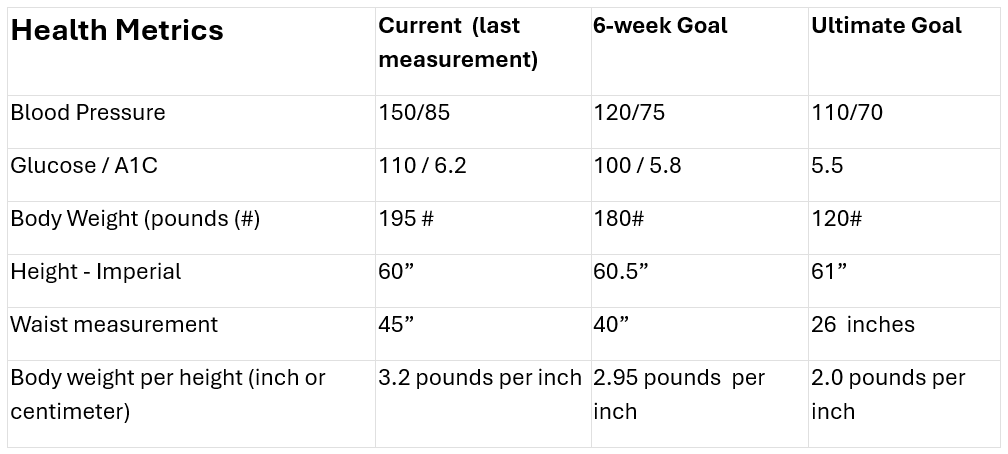
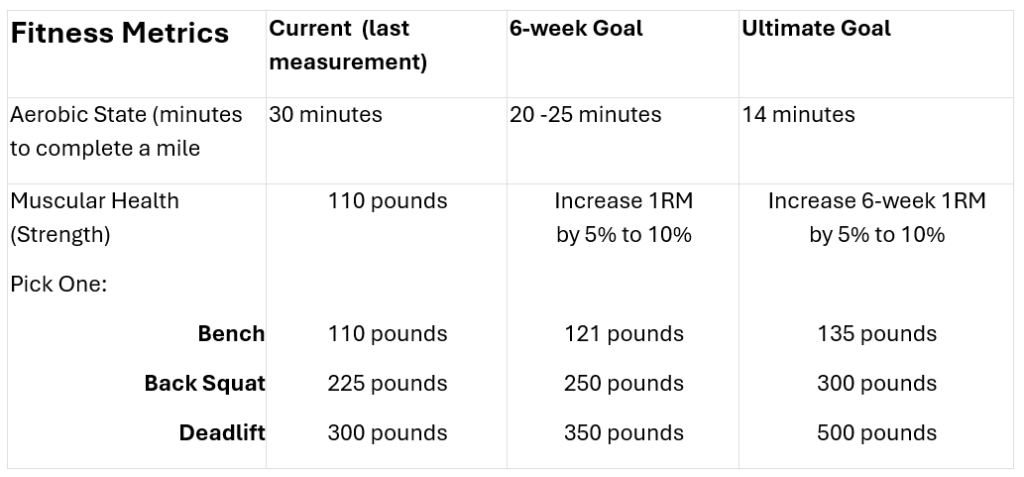
This may be your introduction to self-advocacy. You may receive pushback from doctors who emphasize moving more and eating less, or from friends who say, “Don’t weight lift; you’ll get big and manly.” For this discovery period, track your current eating habits for six weeks without making any changes.
You will find patterns, deficiencies, and behaviors that may be affecting your goals. You need to honestly evaluate your current habits.
Use your 6-week journal to note how your body reacts to certain foods, such as experiencing hot flashes after eating sugar, mouth irritation after eating toasted wheat bread, or allergic symptoms after eating shrimp or eggs.
Understanding how your body burns energy during exercise (aerobic vs. anaerobic metabolism), your recovery needs, and your training intensity helps decide the right macronutrient balance (carbohydrates, proteins, and fats).
Tools like journals, food diaries, or apps such as MyFitnessPal or Cronometer can help you log meals and analyze micronutrient intake (vitamins and minerals).
Customization Based on Goals and Preferences
Once your baseline is clear, the next step is customizing the eating plan to align with your goals, whether that’s fat loss, muscle gain, improved athletic performance, increased energy, or better mental clarity. Personal preferences, lifestyle, and cultural or ethical values also play a critical role. For example, a plan for someone who works long hours may need to prioritize convenience and portability, while someone with food allergies must be cautious of ingredients.
Customization also involves setting realistic meal timing, portion sizes, and frequency based on your natural hunger signals and daily schedule. A highly active person may benefit from more frequent meals or strategic nutrient timing around workouts, while someone with insulin resistance might do better on a lower-carb, higher-fat regimen.
Tracking and Monitoring Progress
Developing a plan is only the beginning—ongoing tracking and adjustments are essential for long-term success. Monitoring tools can include food journals, progress photos, fitness performance metrics, sleep quality, and even mental focus. Wearable devices, such as smartwatches, can also provide real-time insights into calorie expenditure, heart rate variability, and sleep cycles. Regular check-ins (weekly or bi-weekly) help assess what’s working and what needs to be adjusted.
If you are honest and true, and you are not reaching your goals (losing weight, gaining muscle) despite proper discipline (caloric deficit), it may be necessary to reassess portion sizes, hidden sources of calories, or metabolic adaptations.
Evaluating Generic Diets
Diets like keto, paleo, intermittent fasting, and plant-based eating promise rapid results. While some of these trends have approaches supported by some scientific evidence, diets may not be right for everyone. The key is understanding the rationale behind these diets and deciding if they align with your physiological needs, lifestyle, and long-term sustainability.
For example, the keto diet may be effective for reducing carbohydrate cravings and controlling blood sugar in some individuals, but it may hinder performance in high-intensity workouts or cause fatigue in others. Similarly, intermittent fasting may help with calorie control, but it could lead to binge eating or nutrient deficiencies if not managed carefully.
When considering a trendy diet, ask yourself:
- Does this plan fit my lifestyle and schedule?
- Can I see myself following this long-term?
- Is it meeting my energy, nutrient, and performance needs?
- How does it make me feel physically and mentally?
Conclusion
Developing your personalized eating plan is a dynamic, ongoing process that starts with understanding your body and goals. It involves evaluating your fitness and nutrition baseline, customizing your intake based on your needs and preferences, and checking your progress over time.
Trendy, generic diets will not help you meet your goals. The most effective approach is one that adapts to you—not the other way around. By staying informed, flexible, and self-aware, you will build a sustainable and empowering relationship with food that supports your long-term health and performance.